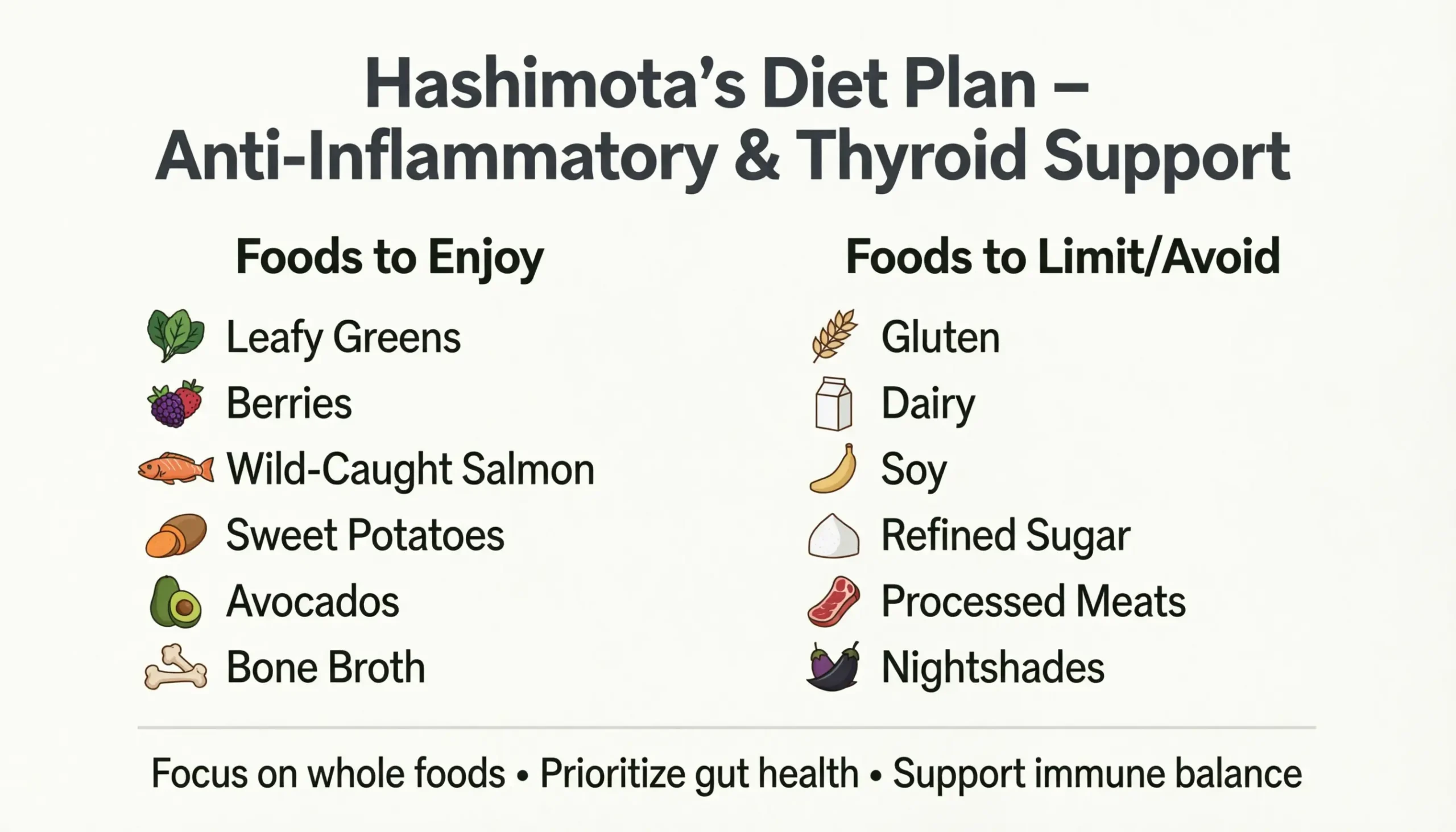
Hashimoto’s Diet Plan – Anti-Inflammatory & Thyroid Support
Hashimoto’s thyroiditis is an autoimmune condition that gradually affects thyroid function, often leading to fatigue, weight changes, and low energy.
A structured hashimoto’s diet plan can support hormone balance, reduce inflammation, and promote healthy body composition.
While no single diet cures Hashimoto’s, research shows that focusing on nutrient-dense foods, proper protein intake, and balanced macronutrients can improve energy levels and overall wellbeing.
This hashimoto’s diet plan also emphasizes anti-inflammatory foods, meal timing, and practical strategies for busy adults in the UK, USA, and globally who want to maintain muscle, manage weight, and support metabolism.
By integrating these evidence-based principles, readers can take proactive steps toward a healthier lifestyle, optimize body composition, and reduce some of the common challenges associated with Hashimoto’s thyroiditis.
MEDICAL DISCLAIMER
“This article provides general nutrition information for educational purposes only. It is not medical advice. Always consult a qualified healthcare professional or registered dietitian before making major diet changes.”
Anti-Inflammatory Foundations in a Hashimoto’s Diet Plan 🌿
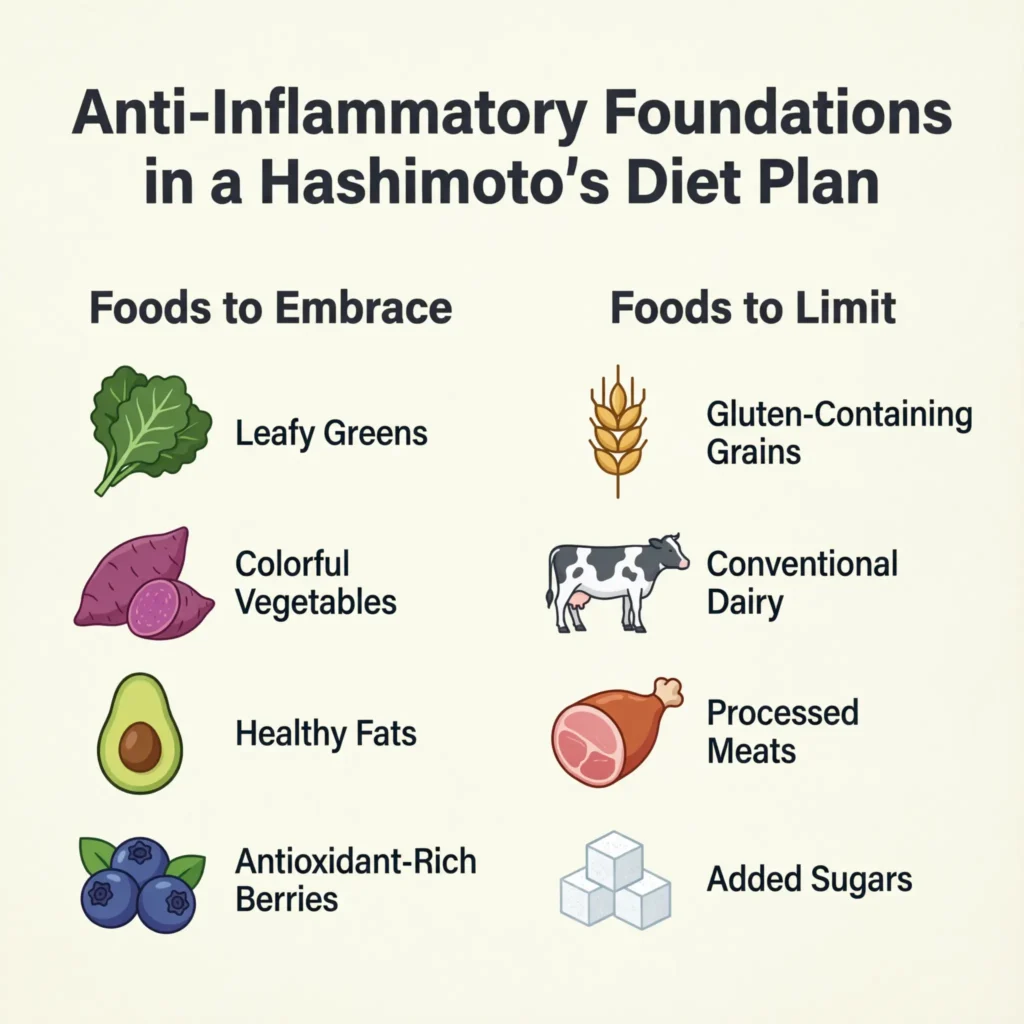
Chronic inflammation is a hallmark of autoimmune thyroid conditions like Hashimoto’s. An effective hashimoto’s diet plan emphasizes anti-inflammatory foods that support immune regulation and reduce oxidative stress.
Key Anti-Inflammatory Foods:
- Fatty fish: Salmon, sardines, mackerel (omega-3 fatty acids)
- Fruits: Blueberries, oranges, cherries (vitamin C & polyphenols)
- Vegetables: Spinach, broccoli, kale (antioxidants & fiber)
- Nuts and seeds: Walnuts, flaxseeds, chia seeds (healthy fats)
- Whole grains: Oats, quinoa, brown rice (gut-supporting fiber)
Practical Tips:
- Include at least two servings of fatty fish weekly.
- Add berries to breakfast or snacks for antioxidant benefits.
- Use olive oil for cooking or salad dressings.
Evidence:
Research from Harvard Health and NIH indicates that anti-inflammatory diets can reduce autoimmune activity and improve energy levels. A consistent intake of these foods supports hormone function, maintains lean mass, and can enhance recovery during workouts.
Protein Priorities in a Hashimoto’s Diet Plan 🍗💪
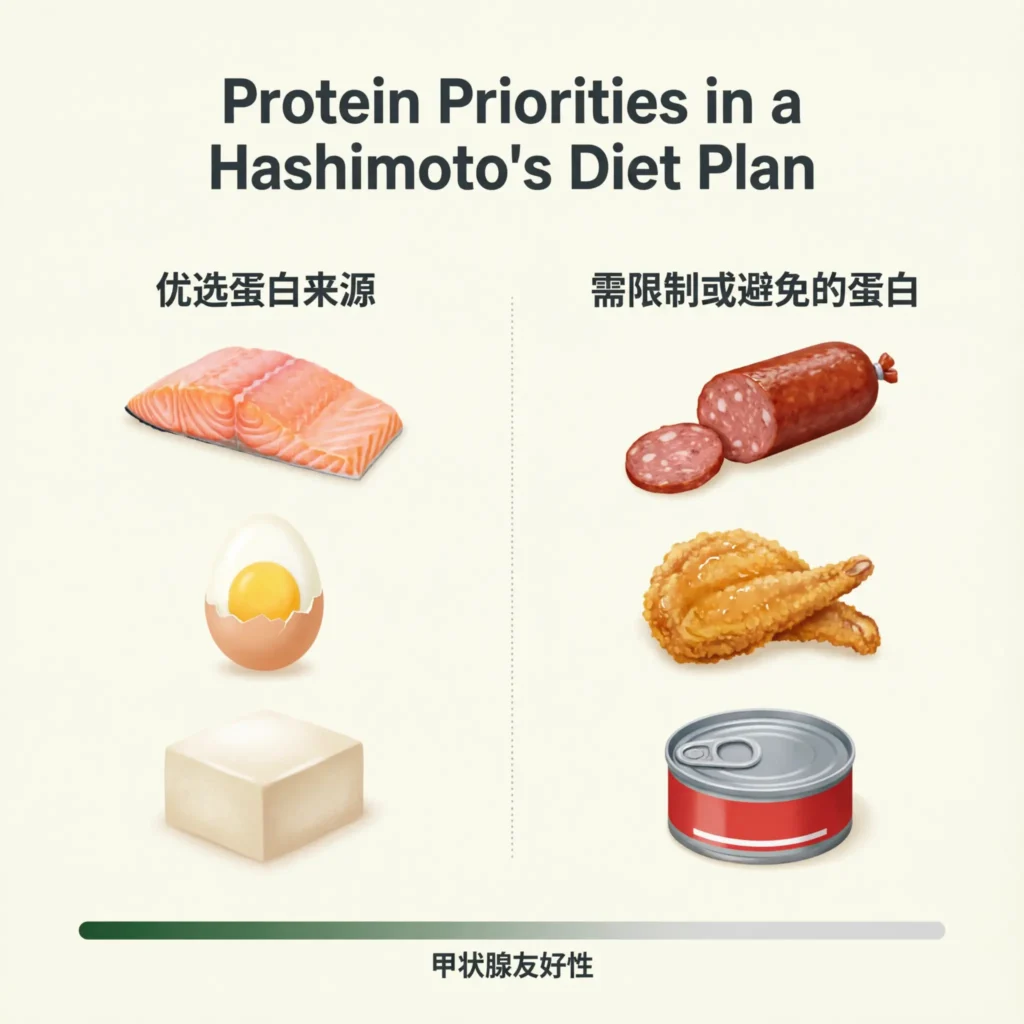
Maintaining muscle mass is crucial for people with Hashimoto’s, especially when fatigue reduces daily activity. A hashimoto’s diet plan should prioritize high-quality protein to support muscle repair, metabolism, and satiety.
Protein Sources:
- Lean meats: Chicken, turkey, lean beef
- Fish: Cod, salmon, tilapia
- Dairy: Greek yogurt, cottage cheese
- Plant-based: Lentils, chickpeas, tofu
- Optional supplements: Whey or plant-based protein powders
Actionable Steps:
- Target 1.2–1.6 g of protein per kg of body weight daily.
- Distribute protein across 3–5 meals for optimal muscle synthesis.
- Pair protein with anti-inflammatory carbs like sweet potatoes or quinoa.
Evidence:
According to the Mayo Clinic, adequate protein intake preserves lean mass, supports metabolic function, and maintains strength. Combining protein with anti-inflammatory foods can reduce fatigue and help busy adults manage both weight and energy while living with Hashimoto’s.
Meal Timing and Energy Balance in a Hashimoto’s Diet Plan ⏰
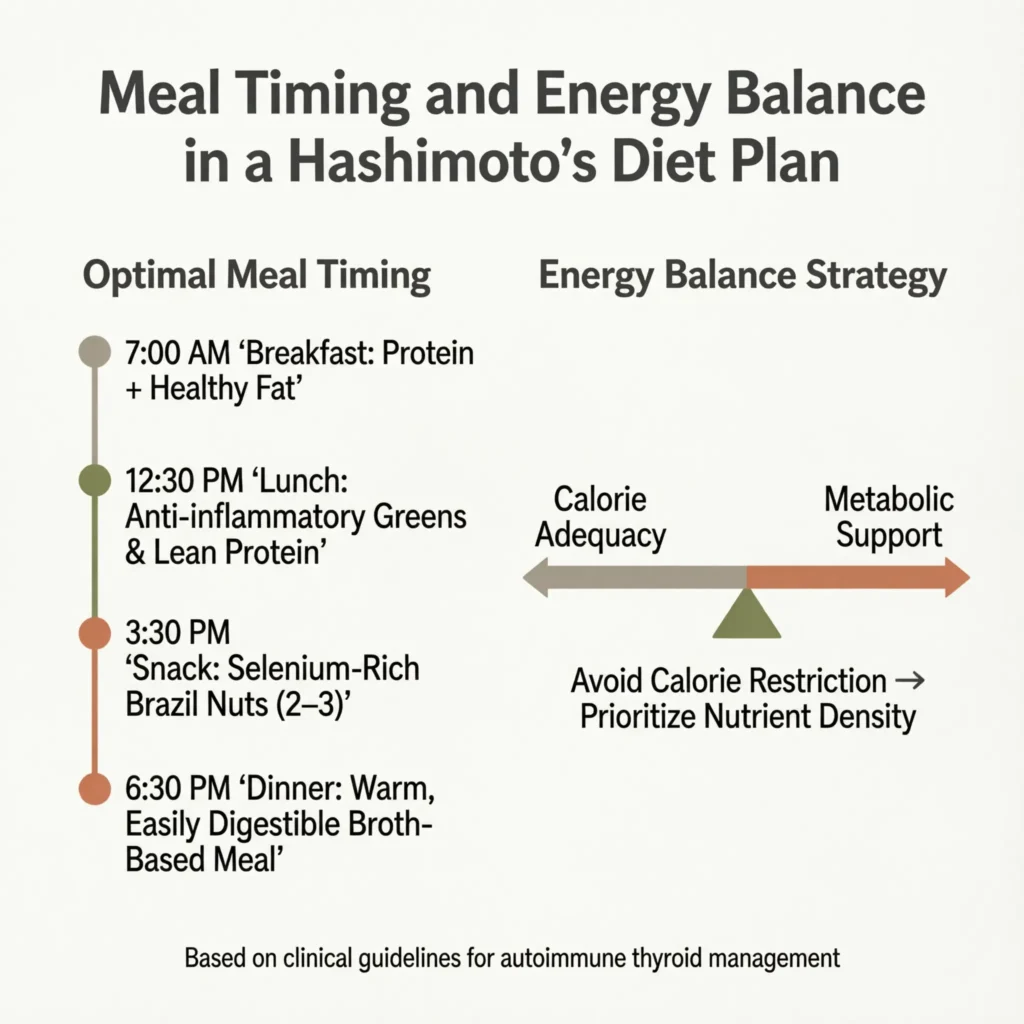
Managing energy and metabolism is essential because thyroid dysfunction can slow calorie burn. A hashimoto’s diet plan focuses on balanced meal timing and moderate calorie distribution to maintain energy and prevent weight gain.
Tips for Effective Meal Timing:
- Eat 4–5 smaller meals daily to prevent energy dips.
- Include protein in every meal to preserve muscle and stabilize blood sugar.
- Time complex carbs earlier in the day to support metabolism and workouts.
Sample Daily Meal Schedule:
| Time | Meal | Focus |
|---|---|---|
| 7:00 AM | Breakfast | Protein + anti-inflammatory fruits |
| 10:00 AM | Snack | Nuts or Greek yogurt |
| 1:00 PM | Lunch | Lean protein + vegetables + whole grains |
| 4:00 PM | Snack | Smoothie with berries & chia seeds |
| 6:30 PM | Dinner | Fatty fish + quinoa + steamed veggies |
| 9:00 PM | Optional Snack | Cottage cheese or plant-based protein shake |
Evidence:
NIH research highlights that consistent meal timing improves nutrient absorption, reduces fatigue, and supports metabolism. This approach helps busy adults with Hashimoto’s maintain energy and optimize body composition.
Essential Micronutrients in a Hashimoto’s Diet Plan 💊
Certain vitamins and minerals play a vital role in thyroid function. A hashimoto’s diet plan should include nutrients that support hormone synthesis, immune balance, and metabolism.
Key Micronutrients:
- Iodine: Seaweed, iodized salt (thyroid hormone production)
- Selenium: Brazil nuts, sunflower seeds (antioxidant protection)
- Zinc: Pumpkin seeds, lean meats (immune & thyroid support)
- Vitamin D: Fatty fish, fortified dairy, sunlight exposure
- Iron: Lentils, lean red meat (essential for thyroid enzyme function)
Practical Tips:
- Include selenium-rich foods a few times per week but avoid excessive intake.
- Pair iron sources with vitamin C to enhance absorption.
- Consider supplements only under professional guidance.
Evidence:
Harvard Health emphasizes that adequate intake of these micronutrients can improve thyroid function, support immunity, and prevent deficiencies common in Hashimoto’s patients.
Foods to Limit in a Hashimoto’s Diet Plan 🚫
While including nutrient-rich foods is important, limiting pro-inflammatory and thyroid-interfering items is equally crucial. The hashimoto’s diet plan focuses on avoiding foods that may exacerbate symptoms.
Foods to Limit or Avoid:
- Processed foods: Packaged snacks, fast food, refined sugars
- Excess soy: Can interfere with thyroid hormone absorption in some individuals
- Gluten-containing grains: For those sensitive, gluten may exacerbate autoimmune reactions
- Trans fats & fried foods: Increase inflammation and weight gain
- Excess alcohol & caffeine: Can affect sleep and energy levels
Practical Tips:
- Replace sugary snacks with berries or nuts.
- Use homemade meals to control ingredients.
- Focus on whole, minimally processed foods.
Evidence:
NIH and WHO research indicates that reducing inflammatory and highly processed foods can support immune regulation, improve energy, and reduce fatigue in Hashimoto’s patients.
Sample Meal Prep Ideas for a Hashimoto’s Diet Plan 🥗
Meal prep simplifies adherence to a hashimoto’s diet plan, especially for busy adults juggling work, exercise, and family. Planning ahead ensures consistent protein, anti-inflammatory foods, and nutrient-rich meals.
Meal Prep Strategies:
- Batch cook lean proteins and whole grains for the week.
- Chop vegetables in advance for quick salads or stir-fries.
- Pre-portion snacks like nuts, seeds, or yogurt cups.
- Freeze soups or casseroles for convenient, ready-to-eat meals.
Sample Weekly Meal Prep:
- Proteins: Grilled chicken, baked salmon, boiled eggs
- Carbs: Quinoa, brown rice, sweet potatoes
- Vegetables: Spinach, broccoli, zucchini, bell peppers
- Snacks: Berry smoothies, almond packs, Greek yogurt cups
Evidence:
NIH studies show meal planning improves adherence to nutrient-rich diets, supports calorie control, and reduces reliance on processed foods—vital for Hashimoto’s patients managing inflammation, fatigue, and weight.
Integrating Exercise with a Hashimoto’s Diet Plan 🏋️♂️
Exercise complements a hashimoto’s diet plan by preserving muscle mass, boosting metabolism, and reducing fatigue. Combining strength training with moderate cardio is ideal for autoimmune thyroid conditions.
Exercise Tips:
- Include 2–3 strength training sessions weekly.
- Add low-impact cardio like walking, cycling, or swimming.
- Schedule workouts when energy levels are highest, often mid-morning or early afternoon.
- Focus on mobility exercises to support joint health and flexibility.
Evidence:
Mayo Clinic research emphasizes that moderate exercise enhances energy, preserves muscle, and supports mental wellbeing in people with Hashimoto’s. Combining proper nutrition with exercise maximizes health outcomes and body composition.
Conclusion
A hashimoto’s diet plan focuses on anti-inflammatory foods, balanced protein, micronutrient-rich meals, strategic meal timing, and careful limitation of inflammatory foods. Key takeaways:
- Prioritize fatty fish, vegetables, fruits, nuts, and whole grains
- Spread protein intake across meals to maintain lean mass
- Limit processed foods, trans fats, excess soy, and refined sugars
- Plan meals ahead to stay consistent with busy schedules
- Combine with moderate exercise for optimal energy and metabolism
Incorporating these evidence-based strategies can support thyroid function, reduce fatigue, and improve overall wellbeing.
Always consult a healthcare professional before making major dietary changes.
Featured Snippet
A hashimoto’s diet plan emphasizes anti-inflammatory foods, lean protein, micronutrients, and consistent meal timing.
Avoid processed foods, excess soy, gluten (if sensitive), and refined sugars.
Meal prep and moderate exercise support energy, metabolism, and muscle preservation, making it easier for busy adults to manage fatigue and maintain healthy body composition with Hashimoto’s thyroiditis.
Author Expertise Note:
Written by Michael Thompson, a nutrition researcher and health writer specializing in evidence-based meal planning for thyroid health, autoimmune conditions, and muscle maintenance. With 8+ years of experience, Nabeel translates scientific nutrition principles into practical strategies for busy adults worldwide.
References
- Mayo Clinic – Hashimoto’s thyroiditis and diet guidelines.
- National Institutes of Health (NIH) – Autoimmune nutrition research.
- Harvard Health Publishing – Anti-inflammatory diets for thyroid health.
- World Health Organization (WHO) – Dietary patterns and chronic inflammation.
- Peer-reviewed studies on protein, micronutrients, and Hashimoto’s thyroiditis.

Michael Thompson is a certified fitness nutrition specialist focused on muscle gain, fat loss, and athletic performance nutrition. He combines effective workout strategies with science-based diet plans to help individuals build strength, improve endurance, and achieve long-term fitness results.