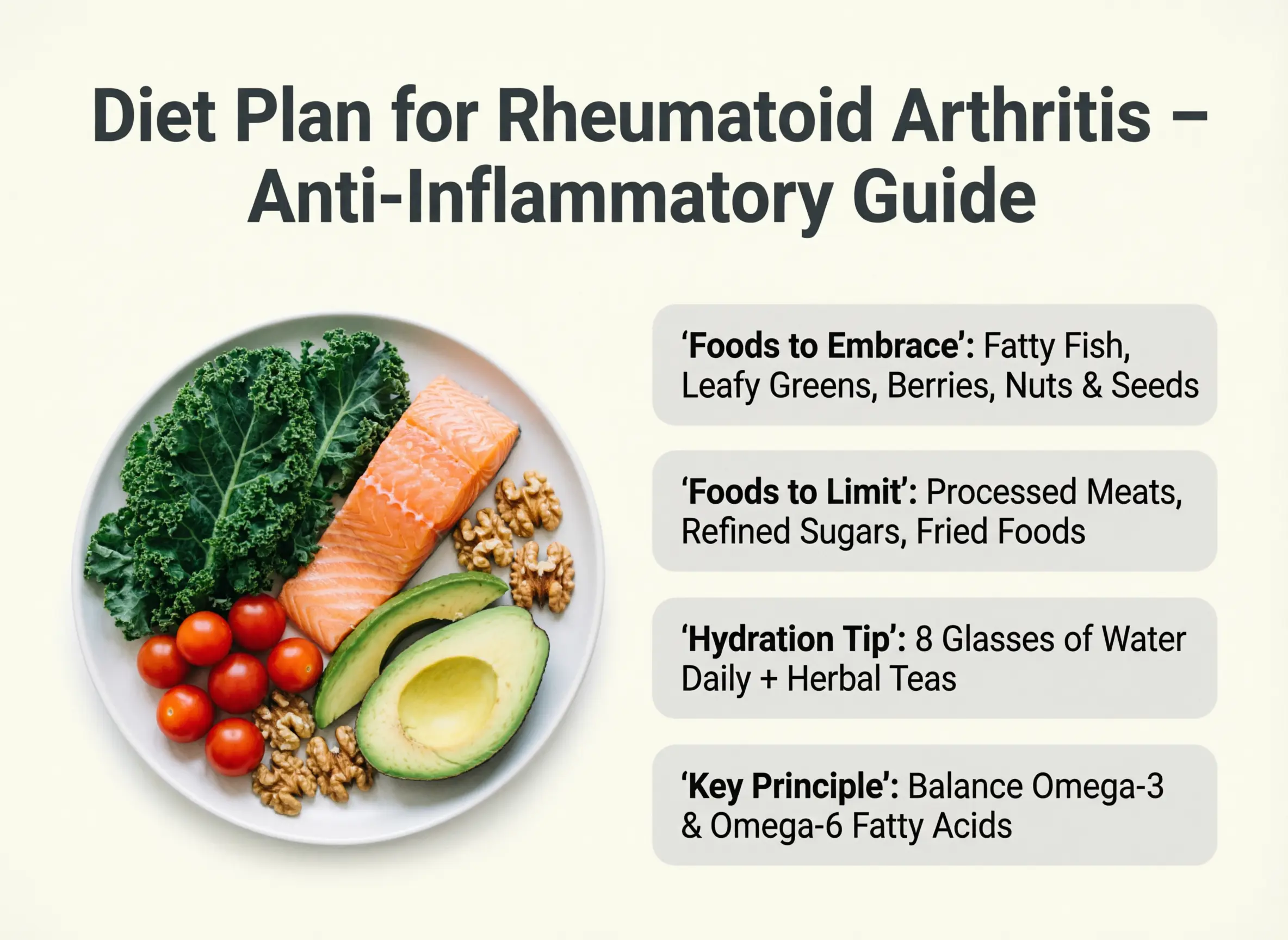
Diet Plan for Rheumatoid Arthritis – Anti-Inflammatory Guide
Rheumatoid arthritis (RA) is an autoimmune condition that causes chronic inflammation in joints, often leading to pain, stiffness, and reduced mobility.
A diet plan for rheumatoid arthritis can play a supportive role in managing inflammation, maintaining muscle mass, and promoting overall health.
While no single diet cures RA, research shows that certain foods and eating patterns may reduce flare-ups and support joint function.
Busy adults in the UK, USA, and globally often struggle to combine proper nutrition with daily responsibilities.
This guide offers practical, evidence-based strategies for meal planning, nutrient timing, and anti-inflammatory food choices.
Incorporating these tips into a structured routine can improve energy, manage weight, and enhance body composition, making it easier to stay active and maintain muscle while minimizing inflammation.
MEDICAL DISCLAIMER
This article provides general nutrition information for educational purposes only. It is not medical advice. Always consult a qualified healthcare professional or registered dietitian before making major diet changes.
Anti-Inflammatory Foods in a Diet Plan for Rheumatoid Arthritis 🌿
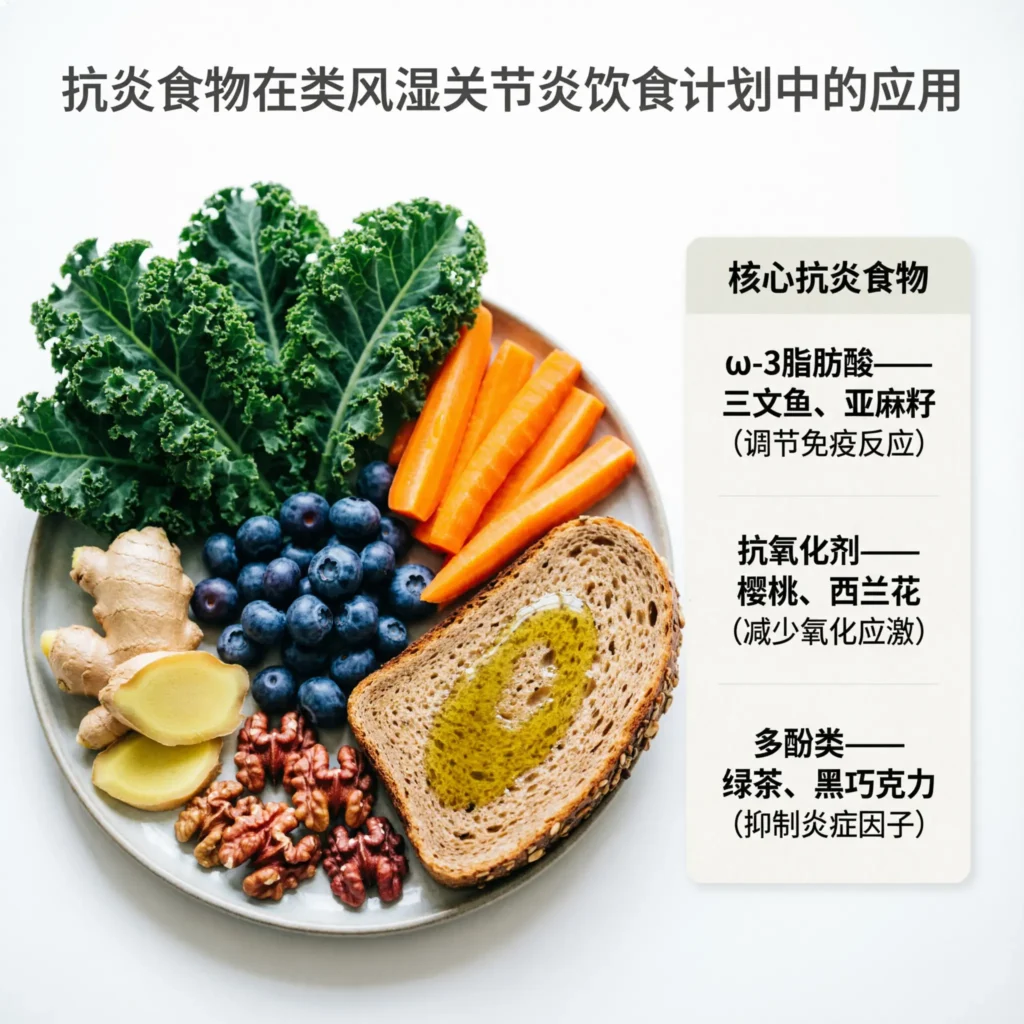
Reducing chronic inflammation is a core goal of any diet plan for rheumatoid arthritis. Certain foods are rich in antioxidants and omega-3 fatty acids, which help combat inflammatory processes.
Key Anti-Inflammatory Foods:
- Fatty fish: Salmon, mackerel, sardines (omega-3s reduce joint inflammation)
- Fruits: Berries, cherries, oranges (vitamin C and polyphenols)
- Vegetables: Spinach, broccoli, kale (vitamins and phytonutrients)
- Nuts and seeds: Walnuts, flaxseeds, chia seeds (healthy fats)
- Whole grains: Brown rice, oats, quinoa (fiber supports gut health)
Practical Tips:
- Add berries to breakfast oatmeal or yogurt.
- Include fatty fish at least twice per week.
- Snack on a handful of nuts or seeds daily.
Evidence:
Studies from NIH and Harvard Health suggest diets rich in anti-inflammatory foods can reduce RA-related joint pain and improve quality of life. These foods also support muscle recovery, energy, and overall wellbeing, making them suitable for busy adults managing both RA and daily routines.
Protein and Muscle Support in a Diet Plan for Rheumatoid Arthritis 🍗💪

Maintaining muscle mass is crucial for RA patients, especially since inflammation and inactivity can accelerate muscle loss. The diet plan for rheumatoid arthritis should emphasize high-quality protein from diverse sources.
Protein Sources:
- Lean meats: Chicken, turkey, lean beef
- Fish: Salmon, cod, tilapia
- Dairy: Greek yogurt, cottage cheese
- Plant-based: Lentils, chickpeas, quinoa
- Protein supplements (optional): Whey or plant-based powders
Actionable Steps:
- Aim for 1.2–1.6 g of protein per kg body weight daily.
- Spread protein intake across 3–5 meals for optimal muscle synthesis.
- Combine protein with anti-inflammatory carbs, like sweet potatoes or brown rice.
Evidence:
According to the Mayo Clinic, adequate protein intake helps preserve lean mass, supports immune function, and promotes recovery during flare-ups. Pairing protein with anti-inflammatory foods can reduce joint stress and improve strength, supporting mobility in busy adults managing RA.
Meal Timing and Calorie Management for Rheumatoid Arthritis ⏰
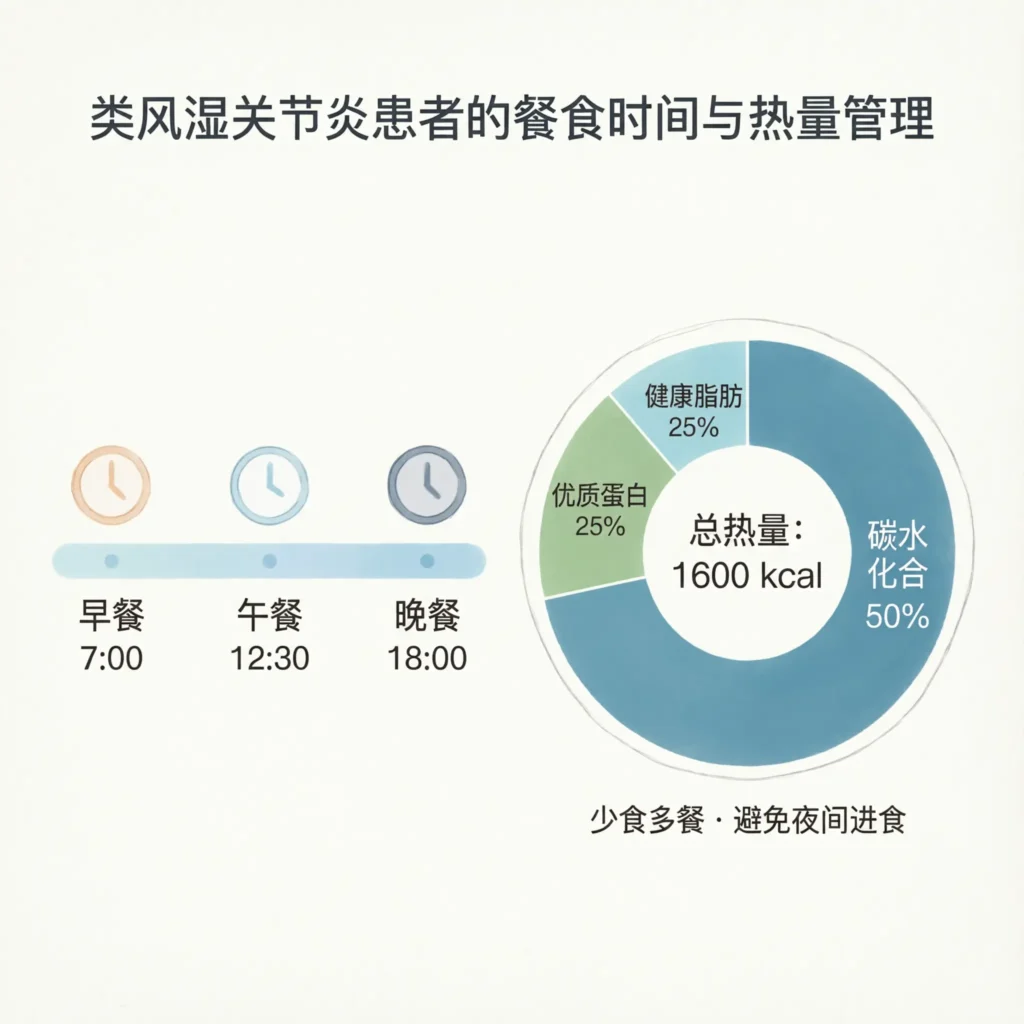
Balancing energy intake is essential, as RA patients may struggle with fatigue, reduced activity, or weight changes. The diet plan for rheumatoid arthritis should optimize calorie distribution and meal timing for consistent energy and inflammation management.
Tips for Effective Meal Timing:
- Eat 4–6 smaller meals per day to maintain steady blood sugar.
- Include protein in each meal to preserve muscle and reduce catabolism.
- Time anti-inflammatory foods around high-activity periods for joint support.
Sample Daily Meal Schedule:
| Time | Meal | Focus |
|---|---|---|
| 7:00 AM | Breakfast | Protein + anti-inflammatory fruits |
| 10:00 AM | Snack | Nuts or yogurt |
| 1:00 PM | Lunch | Lean protein + vegetables + whole grains |
| 4:00 PM | Snack | Smoothie with berries and chia seeds |
| 6:30 PM | Dinner | Fatty fish + quinoa + steamed vegetables |
| 9:00 PM | Snack | Cottage cheese or protein shake |
Evidence:
NIH research highlights that consistent meal timing supports metabolism, reduces fatigue, and improves nutrient absorption—critical for maintaining energy and joint health in RA patients.
Foods to Limit in a Diet Plan for Rheumatoid Arthritis 🚫
While including anti-inflammatory foods is important, avoiding foods that exacerbate inflammation is equally essential. The diet plan for rheumatoid arthritis should minimize pro-inflammatory items that can worsen joint pain or systemic inflammation.
Common Foods to Limit:
- Refined sugars and sweets: Cakes, candies, soft drinks
- Processed meats: Sausages, bacon
- Trans fats: Margarine, fried foods
- Excess alcohol: Can trigger flare-ups and interfere with medications
- Highly processed snacks: Chips, crackers, packaged baked goods
Actionable Tips:
- Swap sugary snacks for berries or dates.
- Cook at home to control ingredients and avoid processed additives.
- Replace fried foods with baked or grilled alternatives.
Evidence:
Research from Harvard Health and WHO shows that diets high in processed foods and added sugars are linked to increased systemic inflammation, worsening RA symptoms, and reducing overall quality of life.
Practical Meal Prep Ideas for a Diet Plan for Rheumatoid Arthritis 🥗
Planning meals ahead simplifies adherence to an RA-friendly diet, especially for busy adults. Effective meal prep ensures balanced nutrition, reduces stress, and supports consistent protein and anti-inflammatory intake.
Tips for Meal Prep:
- Batch-cook lean proteins and whole grains for the week.
- Chop vegetables in advance for quick salads or stir-fries.
- Pre-portion snacks like nuts, seeds, or fruit.
- Use freezer-friendly meals like soups or casseroles for convenience.
Sample Weekly Meal Prep:
- Proteins: Baked chicken breasts, grilled salmon, boiled eggs
- Carbs: Brown rice, quinoa, sweet potatoes
- Veggies: Spinach, broccoli, zucchini, bell peppers
- Snacks: Greek yogurt cups, almond packs, berry smoothies
Evidence:
NIH studies show that meal planning increases adherence to nutrient-rich diets, supports calorie control, and reduces reliance on processed foods—key for RA patients managing inflammation, weight, and muscle maintenance.
Conclusion
A diet plan for rheumatoid arthritis focuses on anti-inflammatory foods, balanced protein, strategic meal timing, and careful calorie management. Key takeaways include:
- Prioritize fatty fish, fruits, vegetables, nuts, and whole grains.
- Spread protein intake across meals to preserve muscle mass.
- Avoid processed foods, added sugars, and trans fats.
- Plan meals ahead to maintain consistency, even with a busy lifestyle.
Incorporating these evidence-based strategies may reduce inflammation, support joint health, and improve energy.
Always consult a healthcare professional before making major diet changes, especially if you are managing RA alongside other health conditions.
Featured Snippet
A diet plan for rheumatoid arthritis emphasizes anti-inflammatory foods, lean protein, whole grains, and meal planning.
Avoiding processed foods and added sugars helps reduce flare-ups.
Consistent protein intake preserves muscle, while meal prep supports busy adults in managing energy, inflammation, and overall joint health.
Author Expertise Note:
Written by Sarah Mitchell, a nutrition researcher and health writer with 8+ years of experience in evidence-based meal planning. Nabeel specializes in practical nutrition strategies for muscle preservation, inflammation management, and busy adult lifestyles.
References
- Mayo Clinic – Rheumatoid arthritis diet guidelines.
- National Institutes of Health (NIH) – Anti-inflammatory nutrition studies.
- Harvard Health Publishing – Foods to reduce inflammation in RA.
- World Health Organization (WHO) – Dietary patterns and chronic inflammation.
- Peer-reviewed research: Protein intake, meal timing, and RA symptom management.

Sarah Mitchell is a clinical nutrition writer specializing in digestive health and therapeutic diet plans. She creates research-based content focused on conditions such as IBS, GERD, and gut health to help readers improve their digestive wellness and overall health through structured diet plans.