1000 Calorie Diet Plan – Fat Loss & Meal Prep Guide
A 1000 calorie diet plan has gained popularity among busy adults aiming for rapid weight loss and improved body composition.
While extreme, this low-calorie approach is often used for short-term fat loss under professional supervision.
It emphasizes nutrient-dense foods, balanced protein, and careful portion control to ensure essential vitamins and minerals are not compromised.
Many in the bodybuilding and fitness community have explored variations of a 1000 calorie diet plan to achieve visible results before competitions or photo shoots.
With careful planning, this diet can help beginners understand calorie management, portion control, and nutrient timing.
By incorporating whole foods, lean proteins, and fiber-rich vegetables, readers can stay fuller for longer while maintaining energy throughout the day.
Proper guidance ensures safety and sustainable results even on a lower-calorie plan.
MEDICAL DISCLAIMER
This article provides general nutrition information for educational purposes only. It is not medical advice. Always consult a qualified healthcare professional or registered dietitian before making major diet changes.
The Role of Protein in a 1000 Calorie Diet Plan 🍗💪
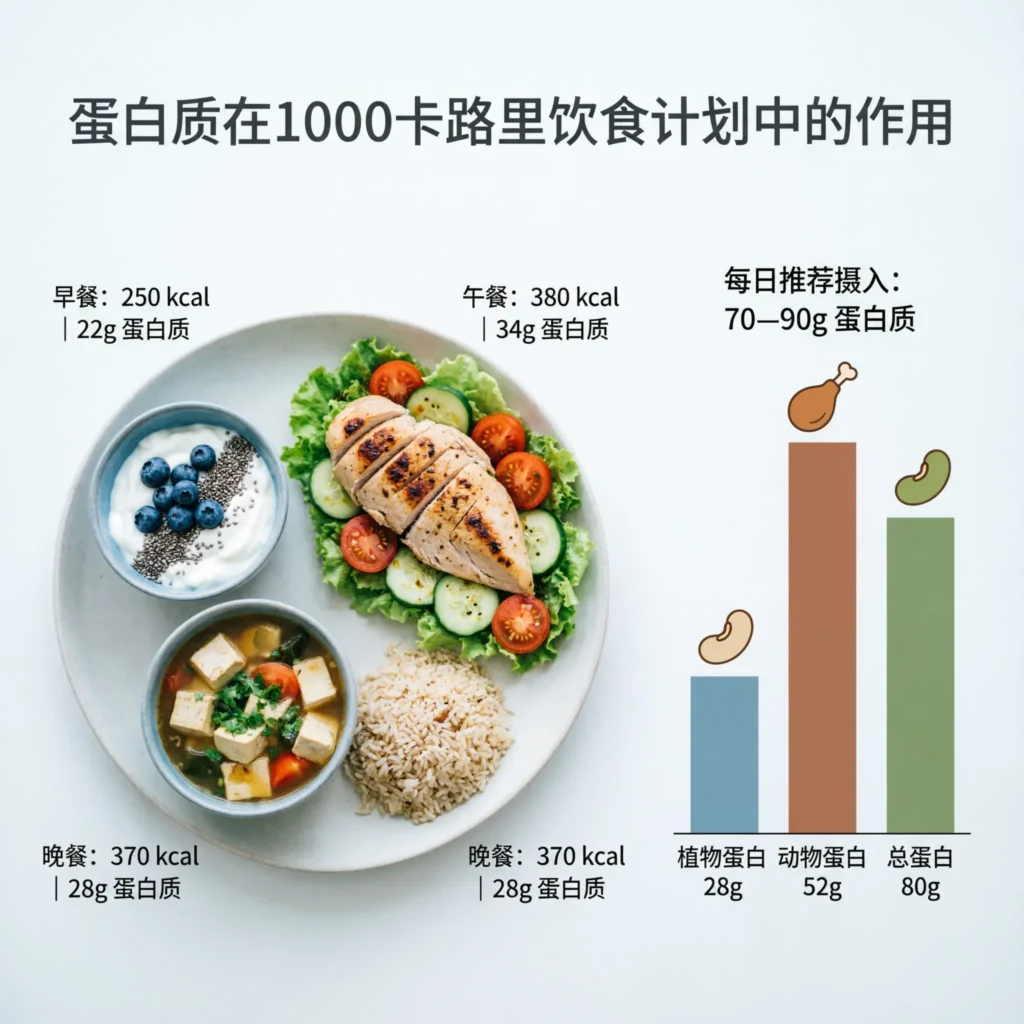
Protein is the most crucial macronutrient in a 1000 calorie diet plan, as it supports muscle preservation, satiety, and recovery. When calories are restricted, adequate protein intake prevents muscle breakdown and maintains metabolism.
Protein Sources to Include:
- Lean meats: Chicken, turkey, lean beef
- Fish: Salmon, cod, tuna
- Dairy: Greek yogurt, cottage cheese
- Plant-based: Lentils, chickpeas, tofu
- Supplements: Whey or plant-based protein powder
Practical Tips:
- Aim for 25–35 grams of protein per meal.
- Include protein at breakfast, lunch, and dinner to stabilize energy.
- Pair protein with fiber-rich vegetables to enhance satiety.
Evidence:
According to NIH research, protein intake at the recommended levels preserves lean body mass during low-calorie diets, supporting metabolic health and preventing muscle loss. Bodybuilders and busy adults benefit from strategic protein timing to sustain energy throughout the day.
Smart Carbohydrate Choices in a 1000 Calorie Diet Plan 🍚
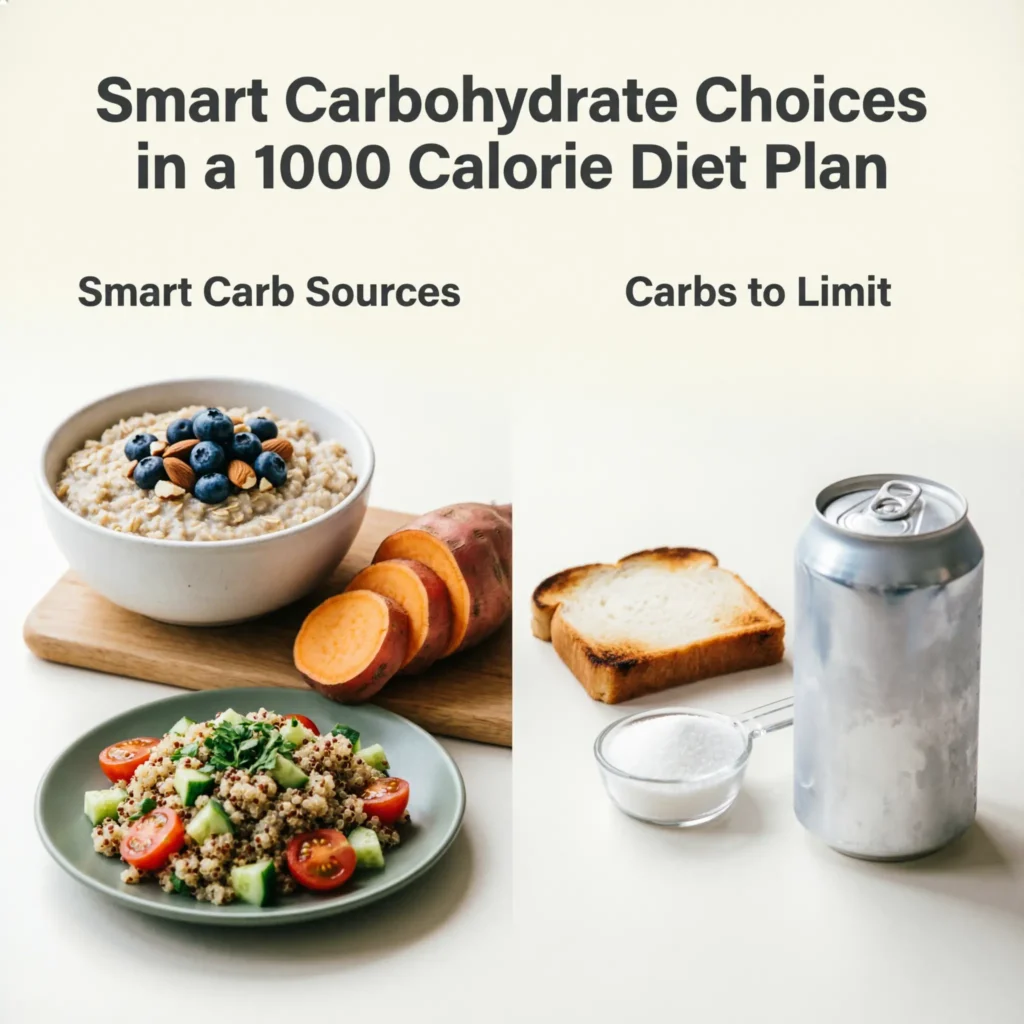
Even on a low-calorie diet, carbohydrates remain essential for energy, especially for active individuals. A 1000 calorie diet plan should focus on complex carbs that provide sustained energy without spiking blood sugar.
Recommended Carb Sources:
- Whole grains: Brown rice, quinoa, oats
- Vegetables: Spinach, broccoli, zucchini, bell peppers
- Fruits: Berries, apples, oranges (in moderation)
- Legumes: Lentils, chickpeas, black beans
Actionable Steps:
- Prioritize carbs in the first half of the day for energy.
- Pair complex carbs with protein to stabilize blood sugar.
- Avoid refined carbs and sugary snacks that increase hunger and cravings.
Scientific Support:
Studies from Harvard Health show that complex carbohydrates help maintain steady energy levels and promote fat loss, making them an important component even in very low-calorie diets.
Healthy Fats to Support a 1000 Calorie Diet Plan 🥑
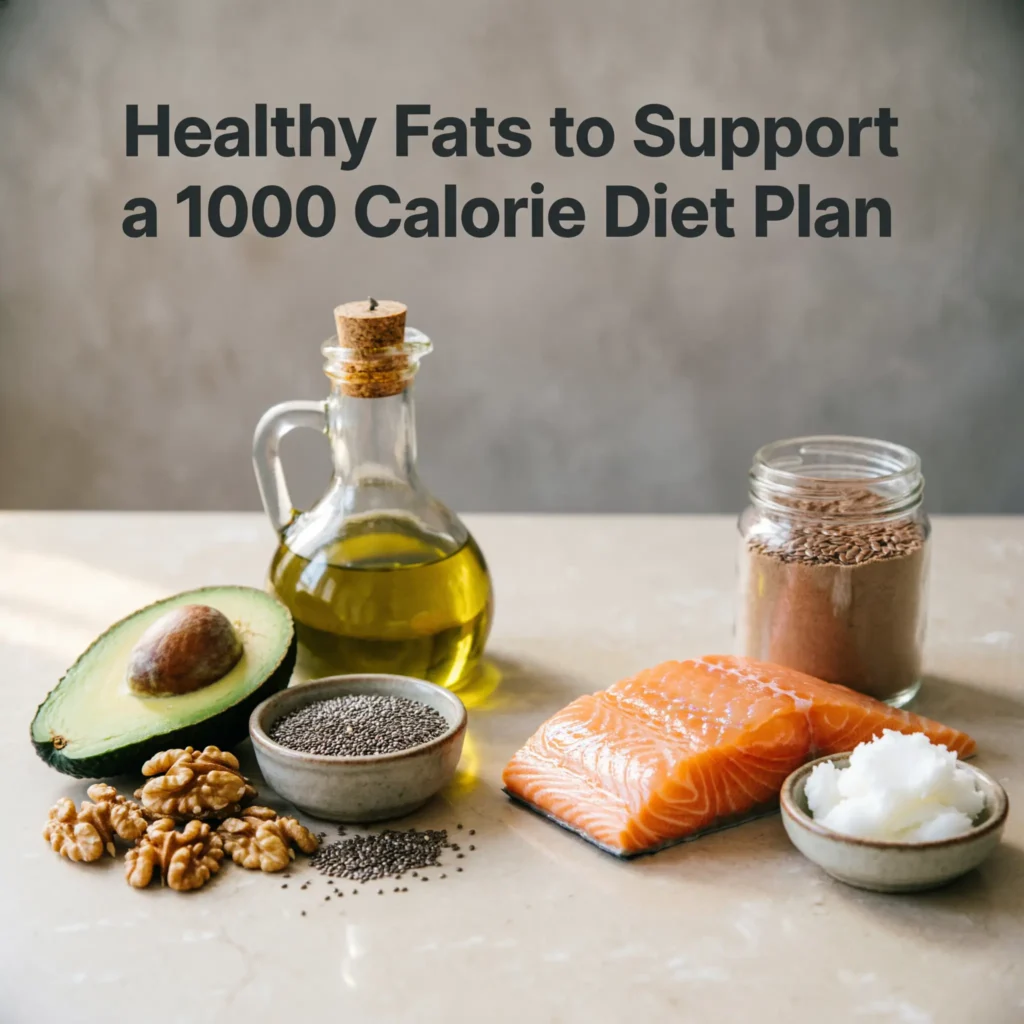
Fats are essential for hormone production, brain function, and satiety. A 1000 calorie diet plan should include small portions of healthy fats to ensure nutrient absorption and reduce hunger.
Recommended Fats:
- Avocados and olive oil
- Nuts and seeds: Almonds, walnuts, chia seeds
- Fatty fish: Salmon, sardines (also provides protein)
Practical Tips:
- Limit total fat intake to 20–25% of daily calories (~22–28 grams).
- Measure portions carefully; healthy fats are calorie-dense.
- Combine fats with vegetables or protein to increase meal satisfaction.
Evidence:
According to Mayo Clinic, moderate intake of healthy fats supports long-term health, reduces inflammation, and prevents nutrient deficiencies even in low-calorie diets.
Meal Timing and Portion Control in a 1000 Calorie Diet Plan ⏰
Effective meal timing and portion control can make a 1000 calorie diet plan easier to follow. Eating smaller, frequent meals keeps energy stable and reduces cravings.
Tips for Meal Timing:
- Divide calories into 4–5 meals per day.
- Include protein in every meal for satiety and muscle preservation.
- Use high-fiber vegetables and low-calorie snacks between meals.
Sample Meal Schedule:
| Time | Meal | Focus |
|---|---|---|
| 7:00 AM | Breakfast | Protein + complex carbs |
| 10:00 AM | Snack | Greek yogurt + berries |
| 1:00 PM | Lunch | Lean protein + vegetables |
| 4:00 PM | Snack | Nuts (small portion) |
| 7:00 PM | Dinner | Fish + leafy greens + ½ cup grains |
Evidence:
Research from NIH demonstrates that spreading meals and calories throughout the day improves adherence to low-calorie diets and reduces overeating.
Meal Prep Strategies for a 1000 Calorie Diet Plan 🥗
Meal prep is essential for successfully following a 1000 calorie diet plan, especially for busy adults balancing work, workouts, and daily responsibilities.
Tips for Efficient Meal Prep:
- Batch-cook lean proteins like chicken or fish.
- Pre-chop vegetables for quick salads or stir-fries.
- Portion meals into containers to avoid accidental overeating.
- Use low-calorie snacks like Greek yogurt, berries, or raw vegetables.
Practical Example:
- Proteins: 150g chicken breast, 2 boiled eggs
- Carbs: ½ cup cooked quinoa or oats
- Vegetables: Broccoli, spinach, peppers (steamed or raw)
- Fats: 1 tsp olive oil or 5 almonds
Evidence:
Studies from Harvard Health show that meal planning improves diet adherence, reduces stress, and ensures nutrient balance, which is crucial when calories are limited.
Sample 1000 Calorie Diet Plan for a Day 🍳
| Meal | Food | Calories | Protein (g) | Carbs (g) | Fat (g) |
|---|---|---|---|---|---|
| Breakfast | 2 boiled eggs, 1 slice whole-grain toast, ½ avocado | 280 | 15 | 20 | 12 |
| Snack | Greek yogurt (150g) + ½ cup berries | 120 | 12 | 10 | 2 |
| Lunch | 100g grilled chicken, ½ cup quinoa, 1 cup steamed broccoli | 300 | 30 | 25 | 8 |
| Snack | 10 almonds | 70 | 3 | 2 | 6 |
| Dinner | 100g salmon, 1 cup zucchini noodles, 1 tsp olive oil | 230 | 22 | 5 | 12 |
Total: ~1000 kcal, 82g protein, 62g carbs, 40g fat
This plan demonstrates how to balance macros, maintain satiety, and meet micronutrient needs on a restricted calorie intake.
Precautions and Adjustments for a 1000 Calorie Diet Plan ⚠️
A 1000 calorie diet plan is considered very low-calorie and may not be suitable for everyone. It should only be followed for short periods under supervision.
Precautions:
- Monitor energy levels and mood—adjust if fatigue occurs.
- Include multivitamins or consult a dietitian to prevent nutrient deficiencies.
- Avoid prolonged adherence to extremely low-calorie diets to prevent metabolic slowdown.
- Adjust exercise intensity to avoid overtraining on low calories.
Evidence:
According to Mayo Clinic and NIH, very low-calorie diets can be effective for weight loss but require careful planning and professional guidance to ensure safety and sustainability.
Conclusion
A 1000 calorie diet plan can support short-term fat loss, muscle preservation, and improved body composition when properly structured. Key lessons include:
- Prioritize lean protein to maintain muscle mass
- Include complex carbs and fiber for energy and satiety
- Incorporate healthy fats for nutrient absorption
- Plan meals and snacks to prevent hunger and maintain adherence
- Monitor health and consult professionals for safety
Even on a restricted calorie intake, nutrient-dense foods, portion control, and meal timing ensure energy balance, muscle preservation, and sustainable results.
Featured Snippet
A 1000 calorie diet plan focuses on lean protein, complex carbs, fiber-rich vegetables, and healthy fats.
Frequent small meals and meal prep improve adherence and satiety.
While effective for short-term fat loss, it should be monitored to prevent nutrient deficiencies and preserve muscle mass, especially for busy adults managing daily energy needs.
Author Expertise Note:
Written by Jessica Brown, a nutrition researcher and health writer specializing in evidence-based meal planning for fat loss, muscle preservation, and busy adult lifestyles. With 8+ years of experience, Nabeel translates complex nutrition science into actionable and practical diet strategies.
References
- Mayo Clinic – Very low-calorie diets and weight loss.
- National Institutes of Health (NIH) – Protein intake and muscle preservation.
- Harvard Health Publishing – Low-calorie diet strategies.
- World Health Organization (WHO) – Dietary fat and nutrient balance.
- Peer-reviewed studies: Meal timing, protein, and calorie restriction in adults.

Jessica Brown is a healthy lifestyle and meal planning expert who focuses on practical nutrition strategies and balanced eating habits. She writes simple and effective diet plans designed to help people maintain healthy lifestyles and achieve long-term wellness goals.