1000 Calorie Diet Meal Plan – Safe Weight Loss Guide
A 1000 calorie diet meal plan has gained popularity among individuals seeking rapid weight loss while managing portion control and macronutrient balance.
While it is lower than typical daily caloric needs, this structured plan focuses on nutrient-dense foods to ensure essential vitamins, minerals, and protein intake are maintained.
Busy adults in the UK, USA, and worldwide often struggle to combine weight loss with muscle maintenance, and a carefully designed 1000 calorie diet can help meet those goals safely under professional guidance.
This article explores practical strategies for planning meals, balancing macronutrients, and including fiber and micronutrients.
By understanding how to structure your day with this calorie target, you can optimize fat loss, support muscle retention, and maintain energy levels for workouts and daily activities.
MEDICAL DISCLAIMER
This article provides general nutrition information for educational purposes only. It is not medical advice. Always consult a qualified healthcare professional or registered dietitian before making major diet changes.
Smart Protein Choices in a 1000 Calorie Diet Meal Plan 🍗💪
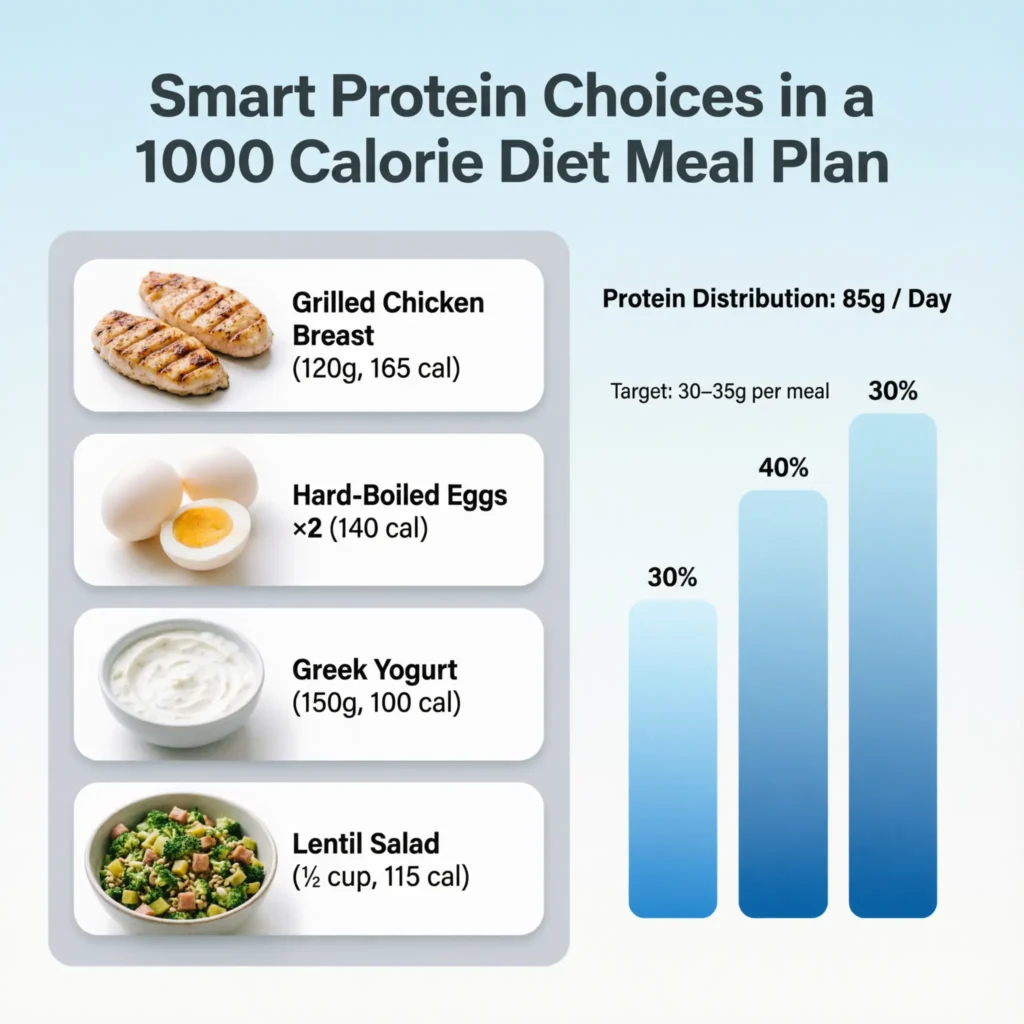
Protein is a cornerstone for muscle retention, especially during a 1000 calorie diet meal plan. In low-calorie diets, protein intake prevents muscle catabolism while promoting satiety.
Key Protein Sources:
- Lean meats: Chicken breast, turkey, lean beef
- Fish: Salmon, tilapia, cod
- Eggs: Whole eggs and egg whites
- Dairy: Greek yogurt, low-fat cottage cheese
- Plant-based: Lentils, tofu, chickpeas
Practical Tips:
- Spread protein evenly across 3–4 meals to maximize absorption.
- Include a protein source in each snack to maintain fullness.
- Consider whey protein shakes if reaching protein targets is challenging.
Evidence:
According to the NIH and Harvard Health, consuming 1.2–1.6 g protein per kg body weight during caloric restriction supports muscle preservation. Pairing protein with low-calorie vegetables increases nutrient intake without exceeding the 1000-calorie target.
Low-Calorie Carbs for Energy in a 1000 Calorie Diet Meal Plan 🍚
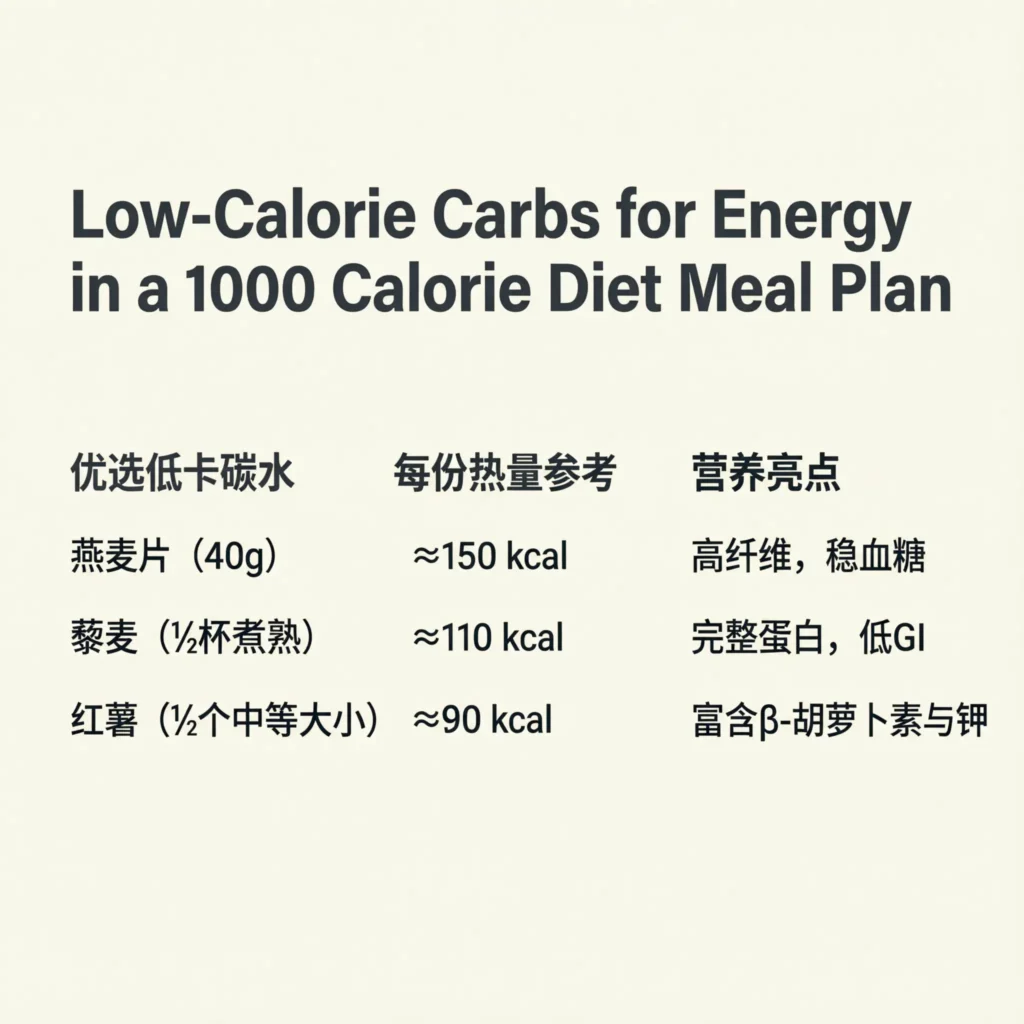
Even in a 1000 calorie plan, carbohydrates provide energy for workouts and daily activity. Choosing low-calorie, high-fiber carbs ensures fullness while supporting digestion.
Recommended Carbs:
- Oats, quinoa, and brown rice (moderate portions)
- Sweet potatoes and winter squash
- Leafy greens and cruciferous vegetables
- Berries and low-sugar fruits
Actionable Steps:
- Pre-portion carb servings to control calorie intake.
- Pair carbs with protein to stabilize blood sugar and energy.
- Use vegetables liberally for volume and micronutrients without adding excessive calories.
Scientific Insight:
Mayo Clinic research highlights that fiber-rich carbs support satiety, prevent overeating, and stabilize glucose levels during calorie-restricted diets, making them ideal for a 1000 calorie diet plan aimed at fat loss.
Healthy Fat Integration in a 1000 Calorie Diet Meal Plan 🥑
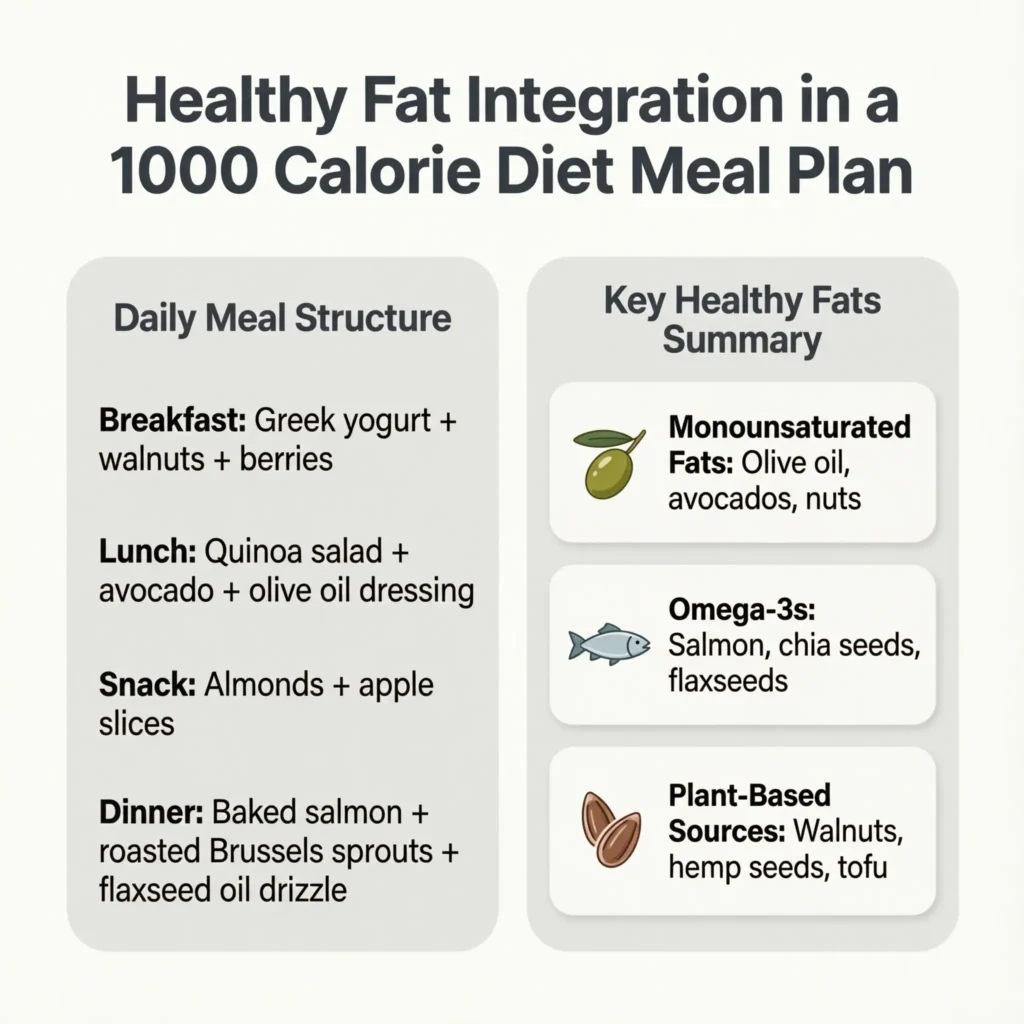
Fats are essential for hormone function and nutrient absorption, even in low-calorie diets. The 1000 calorie diet meal plan should prioritize healthy fats while keeping total calorie intake in check.
Recommended Healthy Fats:
- Avocados and avocado oil
- Nuts: Almonds, walnuts, cashews (small portions)
- Seeds: Flax, chia, sunflower seeds
- Fatty fish: Salmon, mackerel
Practical Tips:
- Limit fats to 20–25% of daily calories (~22–28g).
- Measure portions with a kitchen scale to avoid overconsumption.
- Use fats primarily in meals that also contain protein and vegetables.
Evidence:
Harvard Health and WHO studies indicate that unsaturated fats reduce inflammation, improve satiety, and support metabolic function, which is crucial during a calorie-restricted diet.
Meal Timing and Portion Control Strategies ⏰
Timing and portioning are key to adhering to a 1000 calorie diet meal plan without compromising energy or nutrition. Structured meals prevent overeating and help maintain consistency.
Tips for Meal Timing:
- Divide daily calories into 3 main meals and 2 small snacks.
- Include protein in every meal to maintain muscle and satiety.
- Eat breakfast within 1 hour of waking to kickstart metabolism.
Sample Daily Distribution:
| Meal | Calories | Focus |
|---|---|---|
| Breakfast | 250 | Protein + low-calorie carbs |
| Snack | 100 | Protein or fruit |
| Lunch | 300 | Lean protein + vegetables |
| Snack | 100 | Nuts or Greek yogurt |
| Dinner | 250 | Protein + fiber-rich vegetables |
Scientific Support:
NIH studies suggest that structured meal timing in low-calorie diets improves adherence, energy levels, and nutrient absorption, supporting sustainable fat loss.
Practical Meal Prep Ideas for a 1000 Calorie Diet Meal Plan 🍳🥗
Meal prep ensures compliance with the 1000 calorie diet meal plan while reducing stress and impulsive eating.
Meal Prep Strategies:
- Cook proteins and carbs in bulk for the week.
- Pre-chop vegetables for salads and stir-fries.
- Pre-portion snacks like nuts, seeds, or fruit.
- Use portioned containers to maintain calorie accuracy.
Sample Weekly Prep:
- Proteins: Baked chicken, boiled eggs, grilled tofu
- Carbs: Steamed brown rice, roasted sweet potatoes
- Vegetables: Broccoli, spinach, zucchini, bell peppers
- Snacks: Greek yogurt, mixed berries, small almond packs
Evidence:
Harvard Health reports that meal prepping enhances adherence to low-calorie diets, reduces processed food intake, and ensures nutrient balance even at 1000 calories.
Sample 1-Day 1000 Calorie Diet Meal Plan
| Meal | Food | Protein (g) | Carbs (g) | Fat (g) | Calories |
|---|---|---|---|---|---|
| Breakfast | 2 eggs, 1/2 cup oatmeal, berries | 14 | 25 | 6 | 250 |
| Snack | 1 small apple + 10 almonds | 2 | 15 | 5 | 100 |
| Lunch | 100g grilled chicken, 1 cup steamed broccoli | 25 | 10 | 5 | 300 |
| Snack | 1/2 cup Greek yogurt | 10 | 5 | 0 | 100 |
| Dinner | 100g baked salmon, 1 cup zucchini noodles | 20 | 5 | 8 | 250 |
Total: 71g protein, 60g carbs, 24g fat ≈ 1000 calories
Exercise and Lifestyle Tips on a 1000 Calorie Diet Meal Plan 🏋️♂️
Calorie restriction requires careful lifestyle management to avoid fatigue and muscle loss.
Key Tips:
- Include light resistance training or bodyweight exercises to preserve muscle.
- Stay hydrated—water supports metabolism and satiety.
- Prioritize sleep to optimize recovery and hormone balance.
- Monitor energy and adjust activity levels to prevent overtraining.
Scientific Insight:
NIH studies emphasize that combining structured low-calorie diets with light physical activity preserves lean mass and supports long-term fat loss while reducing negative metabolic impacts.
Conclusion
The 1000 calorie diet meal plan can support weight loss when structured carefully with protein, fiber-rich carbs, and healthy fats. Key takeaways:
- Spread protein throughout meals to maintain muscle.
- Prioritize vegetables and low-calorie carbs for fullness.
- Measure fats and calories for precise intake.
- Plan meals ahead to stay consistent.
- Include light resistance training and proper hydration.
Always consult a healthcare professional before starting a low-calorie diet, especially under 1200 calories, to ensure nutrient adequacy and safety.
Featured Snippet (55 words):
A 1000 calorie diet meal plan emphasizes nutrient-dense proteins, fiber-rich carbs, and healthy fats.
Structured meals, portion control, and meal prep help maintain energy and muscle.
Combined with light exercise, this low-calorie plan supports fat loss while preventing nutrient deficiencies.
Author Expertise Note:
Written by Dr Emily Carter, a nutrition researcher and health writer specializing in evidence-based diet planning and muscle-preserving weight loss strategies. With 8+ years of experience, he provides practical, safe nutrition guidance for busy adults globally.
References
- Mayo Clinic – Calorie-restricted diets and weight loss guidance.
- National Institutes of Health (NIH) – Protein and fat metabolism studies.
- Harvard Health Publishing – Low-calorie diet strategies for muscle retention.
- World Health Organization (WHO) – Dietary recommendations for weight management.
- Peer-reviewed studies on low-calorie diets, meal timing, and macronutrient balance.

Dr. Emily Carter is a registered dietitian with over 10 years of experience in clinical nutrition and weight management. She specializes in calorie-controlled diet plans, metabolic health, and sustainable nutrition strategies. Her work focuses on helping people build healthy eating habits and long-term wellness through balanced diet plans and healthy lifestyle guidance.